Vitamin K2 And Arterial Flexibility: An Overlooked Pathway
Vitamin K2 directs calcium toward bone and away from soft tissue like artery walls, a mechanism directly relevant to keeping arteries flexible rather than stiff.
It is a genuinely different pathway from nitric oxide production, and one many circulation-focused formulas leave out entirely.
The difference between K1 and K2
Vitamin K1, found abundantly in leafy greens, is primarily involved in blood clotting. Vitamin K2, found in smaller amounts in fermented foods and animal products, has a distinct role in calcium metabolism — specifically, activating proteins that direct calcium toward bone tissue and away from soft tissue like blood vessel walls.
Why arterial calcification matters
Over time, calcium can accumulate in artery walls in a process related to arterial stiffening, sometimes described as calcification. Stiffer, less flexible arteries are associated with reduced ability to properly dilate and constrict in response to blood flow demands — a genuinely different problem from insufficient nitric oxide production, though the two can compound each other.
What the research on Vitamin K2 shows
Research on Vitamin K2 and vascular health, summarised by the NIH Office of Dietary Supplements, has examined its association with arterial flexibility measures and calcium metabolism markers. This research base is smaller than the nitric oxide literature but represents a genuinely distinct and relevant mechanism.
Why many competing formulas skip it
Applying this to Boostaro
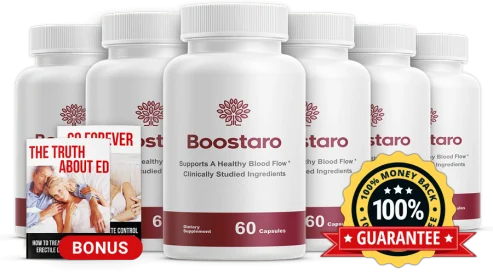
Vitamin K2 is one of Boostaro's nine ingredients, paired with the collagen-supporting amino acids (Vitamin C, L-Lysine, L-Proline) to address vessel structure and flexibility alongside the nitric-oxide-focused ingredients. This breadth is one of the more genuinely differentiated aspects of the formula compared to single-mechanism competitors.